Real-Time Metalworking Fluid Control Made Easy
Learn how to control metalworking fluids in real time without halting production. Discover implementation steps and operational benefits.
- What is real-time process fluid control?
- Why control metalworking and other process fluids?
- How do you control process fluids in real time without stopping production?
- What does Digiclean measure and show?
- What results does Digiclean report?
- How can you buy and scale the system?
- FAQs
Real-time control of Process Fluids replaces manual sampling with a sensor that measures continuously. It can be installed without interrupting production. This guide walks you through the steps, using machining fluids in metalworking as the example.
What are the key details to consider?
- Digiclean’s sensor continuously measures chemical concentration and temperature, along with other parameters the process requires, such as pH and conductivity.
- Installation typically takes less than two hours and is designed to be completed without interrupting production.
- Real-time alerts show when chemical concentration moves outside the operating range.
- Dosing can be handled by operators or automated.
- Data can be connected to MES, ERP and SCADA systems through API.
What is real-time process fluid control?
Real-time process fluid control means a sensor measures the fluid continuously and the data is shown in a platform with alerts, instead of relying on weekly or daily manual measurements.
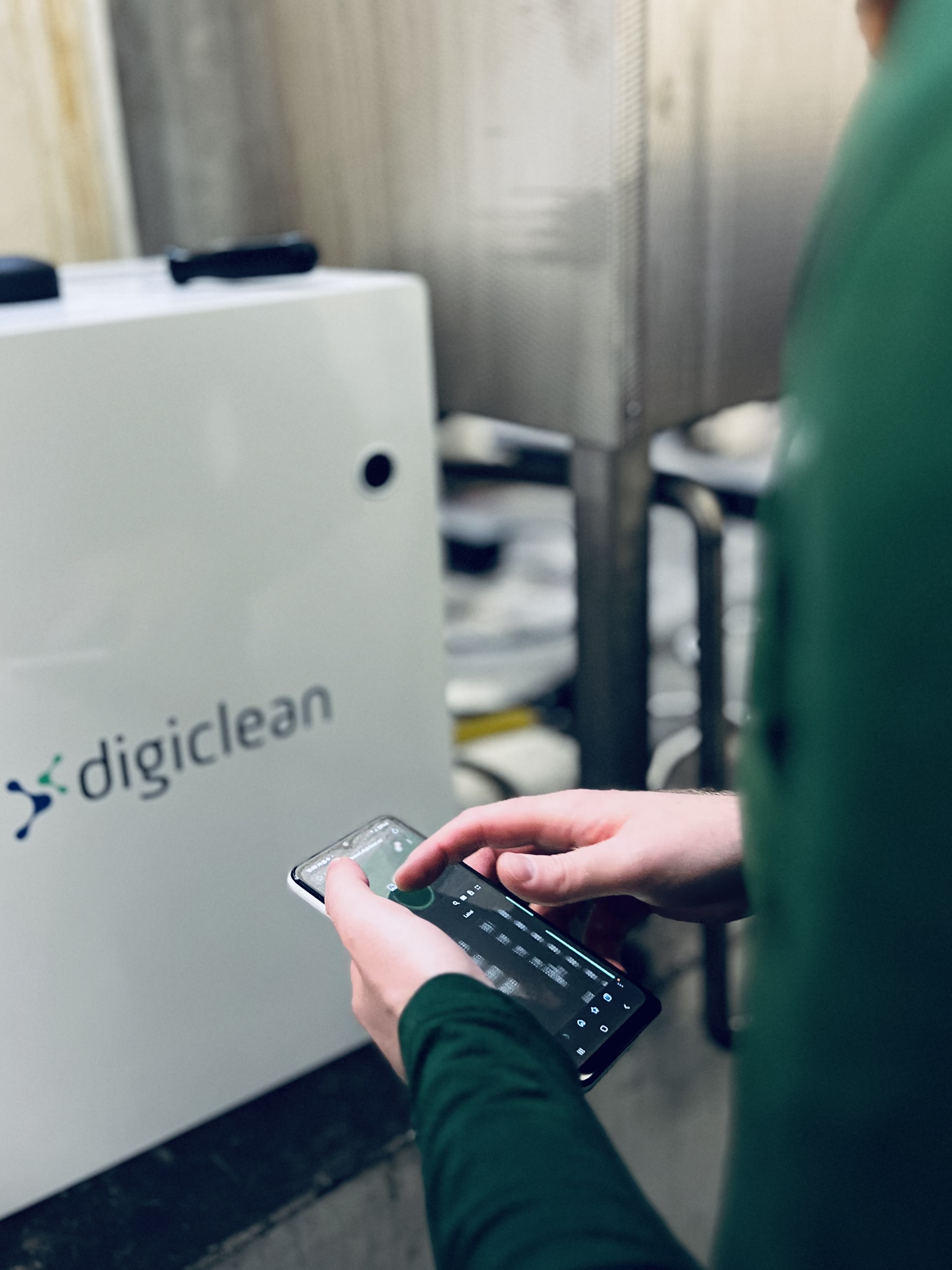
Digiclean’s sensor continuously measures chemical concentration and temperature. The software turns this process data into operational visibility, alerts and automated chemical dosing. Operators can control process conditions, respond to deviations or automate dosing through one centralized platform.
One Digiclean customer describes the change like this: “Thanks to this solution, we have switched to continuous monitoring of key parameters instead of conducting weekly or daily measurements, which creates value for us.”
Why control metalworking and other process fluids?
Process fluids influence quality, efficiency, chemical consumption and operational stability, yet they often remain one of the least visible parts of the production process. Monitoring makes them visible.
Without it, a few things tend to go wrong. Limited real-time data makes it harder to understand process conditions and make confident decisions. Manual sampling and chemical dosing increase workload and leave more room for process variability. Unstable fluid conditions can cause quality issues, rework and production downtime. Limited concentration data can lead to overdosing and premature bath changes, which increases operating costs. Frequent sampling and chemical dosing also increase operator handling and exposure.
The system is used in machining fluids, surface treatment, technical cleanliness and pretreatment applications, among others, and is commonly found in industries such as metalworking.
- Process fluids affect quality, efficiency, chemical consumption and stability.
- Manual sampling adds workload and leaves room for variability.
- Unstable fluid conditions can cause quality issues, rework and downtime.
- Limited concentration data can lead to overdosing and premature bath changes.
How do you control process fluids in real time without stopping production?
Follow these steps: agree where the sensor goes, install it, set the alert range, decide how dosing is handled, connect the data to your systems and review the results. Installation is designed to be completed without interrupting production.
1. Book a process review.
Start by reviewing your process fluids with the Digiclean team. The process review is the way Digiclean recommends evaluating whether its system fits your operation: it creates the greatest value where process fluids have a direct impact on quality, chemical consumption, process stability or wastewater generation.
2. Agree on the sensor location and installation plan.
During the startup meeting, Digiclean and the customer jointly identify the best location for the sensor and define the installation plan.
3. Install the sensor.
The system is plug-and-play. Installation typically takes less than two hours, requires no modifications to the production environment and is designed to be completed without interrupting production. No construction work or equipment changes are needed.
4. Set up alerts.
The system gives real-time alerts when chemical concentration moves outside your operating range, so deviations can be detected earlier.
5. Decide how dosing is handled.
Operators can monitor process conditions and respond to deviations, or automate dosing through the software, which offers intelligent chemical dosing.
6. Connect the data to your systems.
Digiclean can be integrated with existing MES, SCADA, ERP and other operational systems through API connections, so process fluid data can be centralized in the platforms you already use.
7. Review the results.
Digiclean says most customers begin gaining visibility into their process fluids immediately after installation, and that operational improvements and optimization opportunities typically become visible during the first weeks of monitoring.
- Plug-and-play installation, typically less than two hours.
- No modifications to existing systems.
- Real-time alerts when concentration leaves the operating range.
- Dosing can be automated or handled by operators.
- API integration with MES, ERP and SCADA systems.
What does Digiclean measure and show?
Digiclean’s software currently provides real-time visibility into chemical concentration and temperature. If you need other measurements, our team can help evaluate your requirements.
The system has two components: the sensor and the software platform. The sensor is built for demanding industrial environments, with wireless communication and non-intrusive installation. The software gives you real-time process visibility and historical data, sends alerts and notifications, and handles intelligent chemical dosing. It works around the clock, 24/7.
The system can control a wide range of industrial Process Fluids. The specific fluids and applications depend on the process requirements, so we discuss your production environment with you and agree on the best setup together.
- Chemical concentration and process fluid temperature in real time.
- Historical data visualization.
- Alerts and notifications.
- Intelligent chemical dosing.
- Wireless communication.
What results does Digiclean report?
Results with the system include a 94% reduction in wastewater, a 69% reduction in chemical consumption and 18.85 tonnes of CO₂ saved per year.
The technology has been tested and validated in collaboration with leading industrial manufacturers. One manufacturer shared this feedback: "the system really makes our work easier and requires less handling, which extends the service life of the baths.”
To estimate the effect in your own operation, Digiclean offers a Business Case Simulator that calculates potential reductions in bath changes and CO₂ emissions, along with estimated cost savings, based on your production data.
- Reported figures: 94% waste water reduction, 69% chemical reduction and 18.85t CO₂ saved per year.
- Reduce manual work with continuous process visibility.
- Reduce chemical consumption based on real process conditions.
- Improve traceability with centralized process data.
How can you buy and scale the system?
Two options are available: purchase the hardware, or choose a monthly licence that includes the hardware and service. The system is designed to cover as many tanks, production lines and facilities as your operation needs.
This means the system can be extended to more tanks, lines and facilities as your needs evolve. Our team helps you identify the model that best fits your operational and financial requirements.
- Purchase the hardware or use a monthly licence that includes hardware and service.
- Start with one line and expand to multiple processes and facilities.
FAQs
What parameters can be monitored?
The software currently provides real-time visibility into chemical concentration and temperature. Additional measurements can be evaluated together with its team.
Does production have to stop during installation?
No. Installation is designed to be completed without interrupting production, and it typically takes less than two hours.
Can the system work with existing equipment and software?
No modifications to existing systems are needed, and data can be integrated with MES, SCADA, ERP and other operational systems through API connections.
Does the system only monitor, or can it dose chemicals?
Both are possible. Operators can monitor and respond to deviations, or automate dosing through the software’s intelligent chemical dosing.
Which production processes is it used for?
Applications include surface treatment, technical cleanliness, machining fluids and pretreatment, among others.
How quickly can results be seen?
Most customers begin gaining visibility into their process fluids immediately after installation, and operational improvements typically become visible during the first weeks of monitoring.
Want to see how real-time Process Fluid control could work in your operation? Book a Process Review at digiclean.se. Our team responds within one business day. Want to go deeper? Learn more about the solution and how it works in practice. You can also explore our resources, including the business case calculator, to estimate what better control of your Process Fluids could mean for your operation.